


Create a career that changes lives – starting with yours
Enter a world where science, innovation and technology create real impact and your future can thrive.
Western Australia’s biomedical industry is rapidly expanding and is globally recognised for developing life-saving medicines, cutting edge medical devices, and innovative digital health solutions.
From clinical trials, laboratory and clinical operations or exciting medical research through to manufacturing and engineering, automation and robotics — there’s a place for every skill set and passion.
If you're driven by the desire to make a difference and would like to do work that truly changes people's lives, a career in the biomedical industry could be for you.
Whether you're at the start of your career journey or embracing a career transition, this thriving industry can open doors to many exciting opportunities for a diverse and rewarding career pathway.


| Thinking about your next career move? Whether you're starting out, changing careers, or upskilling you’ll find everything you need right here — industry insights, job and career pathways, and training options. Select from the following links to find out more. |
|---|
Western Australia's thriving biomedical industry
A global leader in biomedicine
Western Australia has a globally recognised biomedical industry, offering dynamic and rewarding careers at the cutting edge of research, technology and innovation. It is home to more than 250 biomedical organisations and support services, top-tier TAFE colleges, leading universities offering strong biomedical programs, and internationally recognised research institutes.
The industry provides an exceptional environment for learning, collaboration and career development with opportunities spanning medical research, data analysis, bioengineering, advanced manufacturing, digital health, pharmaceuticals, software programming and artificial intelligence, robotics and more.
WA’s unique comparative advantages – its time zone proximity with more than half of the world’s population, research excellence, global connectivity and collaborative and thriving ecosystem — make it an ideal destination for capital and talent in an increasingly competitive global landscape.

What working in biomedicine can offer you
- A meaningful and exciting career
- Great opportunities for career growth and specialisation
- Variety in your work — every day brings something new
- The chance to collaborate with people and teams
- Opportunities to work anywhere in the world
- Roles across research and innovation labs, biotech companies, and more
Western Australian State Government support
The WA State Government is actively investing in the future of biomedicine through bold, forward-looking strategies. The Health and Medical Life Sciences Industry Strategy focuses on driving industry growth and innovation, backed by $8.6 million in funding over four years. It leverages WA's internationally recognised expertise to drive the commercialisation of practical solutions to complex health challenges.
Complementing this, the Health and Medical Research Strategy 2023—2033 provides a clear 10-year roadmap to strengthen WA's research ecosystem — expanding the workforce, fostering collaboration, attracting investment, and translating discoveries into improved health outcomes.
The WA Clinical Trials Roadmap also highlights WA's growing reputation as a leading destination for high quality, cost effective clinical trials of medical products which, driven by both domestic and international investment, contributed $1.6 billion to the Australian economy in 2022. They also generated valuable export revenue, supported the direct employment of 7,700 people, and helped retain the evaluation and supply chains for locally developed treatments.
WA State Government initiatives such as the Future Health Research and Innovation Fund (FHRI), backed by the State's $1.8 billion sovereign wealth fund, and the WA Venture Capital Initiative are also accelerating growth across the industry. It has also partnered with MTPConnect and the University of Western Australia to deliver the WA Life Sciences Innovation Hub (WALSIH) which provides a concierge service to connect researchers and industry with funders, collaborators, and service providers.
Other investments include world class infrastructure such as the Queen Elizabeth II Medical Centre (QEII}, state of the art clinical trial facilities, thriving innovation hubs, and the Pawsey Supercomputer for advanced data science.
Want to know more? You can keep up to date with WA State Government strategies, initiatives, programs and investments in the biomedical industry on the WA.gov.au website. |
Research and manufacturing spotlight
Life changing product for nerve repair
In this short video, you'll hear about an example of the innovative and world leading research and manufacturing happening in Western Australia — the development of the RemplirTM product for repairing nerves — which is returning upper body movement to quadriplegics.
Local company Orthocell, co-founded by Paul Anderson and Minghao Zheng, conducted cutting edge research to develop a collagen wrap for use in nerve repair surgeries.
Orthocell is now manufacturing the specialised product in Western Australia, and exporting it around the world.
Opportunities for skilled migrants
Western Australia is home to a growing biomedical industry that's strongly supported by the State Government. It is also achieving international recognition as an innovative world leader in research, manufacturing and technologies across a range of specialist areas. If you are qualified and/or experienced in eligible fields such as biomedical engineering, medical manufacturing, biochemistry, biotechnology, laboratory operations, or medical or pharmaceutical research, there may be an opportunity here for you in WA as a skilled migrant.
Western Australia isn’t just a smart place to build your career — it’s an extraordinary place to live, work and thrive. It has a unique set of strengths and capabilities, from a highly skilled workforce to abundant resources and outstanding research and education institutions.
Perth, Western Australia's capital city, is consistently ranked among the world’s most liveable cities thanks to its outstanding education, healthcare, infrastructure and natural beauty. Western Australia is a vast state, and its regional areas offer unique lifestyle and employment opportunities.
Please visit the Migration WA website, to find out more about skilled migration
Job roles and career opportunities
Western Australia's biomedical industry offers a range of exciting and rewarding jobs and careers. Here we have selected a few occupations that have a high demand for skilled workers — follow the links to find out more about each one.
You can also browse through over 600 occupation profiles via the search below.
Search occupation profiles
Using the occupation profiles search
As this list contains hundreds of occupation profiles, you can search by keyword, or by letter A—Z.
Industry area
Use this filter to search within a specific industry.
Once you have found occupations that interest you, you could conduct more detailed research into those careers — for example; talking with people who work in that industry.
Western Australian industry spotlightsWestern Australia is a global leader in the biomedical industry with companies developing innovative and life changing health and healthcare products, technologies and solutions. This important work involves a team of people working in a range of roles spanning laboratory operations, clinical research, information technology and product design and manufacturing, as well as medical and scientific specialisations. The following videos highlight just two examples of the exciting work happening in WA that you could be part of. |
Artificial intelligence fighting heart disease
Artyra is a Perth-based medical technology company pioneering the use of artificial intelligence (AI) to transform cardiac imaging and improve the diagnosis and management of coronary artery disease, a leading cause of death globally. With a mission to save lives, Artrya develops clinically driven solutions that deliver fast, accurate and actionable insights at the point of care.
Artrya’s flagship solution, Salix®, is an AI-powered cloud platform providing near real time analysis of coronary CT angiography (CCTA). It rapidly evaluates high risk coronary plaque and delivers non-invasive blood flow assessment, offering clinicians critical information they need in minutes instead of days or weeks. As the only real time, point of care coronary assessment platform globally; Salix® improves diagnostic clarity, streamlines workflow, reduces variability and enables earlier, more precise patient treatment.
Biotechnology for antimicrobial resistance
Established in 2021, Lixa — a Perth-based biotechnology company — has discovered a group of molecular ingredients that can be used across bacterial species, resistance mechanisms and antimicrobial drug classes to combat superbugs or antibiotic-resistant microbes.
Antimicrobial resistance contributes to complex health issues including recurrent infection, and is a leading cause of death worldwide. It also causes recalcitrant biofouling and biocorrosion problems in other industries. Lixa's NeoX™ technology has the potential to mitigate antimicrobial resistance crisis across human health, agribusiness, marine and industrial markets by taming ‘untreatable’ planktonic and biofilm resistant bacteria thus restoring the effectiveness of the existing antibiotic, biocide or disinfectant treatment arsenal.
Career stories
We spoke to people working in Western Australia's biomedical industry, and asked about their career story. In the slideshow below you can read what they say about why they love their job, the work they do and their career journey so far.
Maisha Zaman | Research and Development Engineer
 | Maisha Zaman is a Research and Development Engineer at ArthroLase, a medical technology startup based in Western Australia that's developing a robotic laser system designed to precisely shape bone during knee replacement surgery. Her areas of expertise are mainly in prototyping, experimentation and progressing ArthoLase’s medical device towards commercialisation. |
She is passionate about contributing to WA’s dynamic health and medical innovation sector, and finds purpose in developing technologies that can significantly improve patient outcomes in orthopaedic care.
Maisha's advice for those starting out in the industry is to stay curious and build both your technical and soft skills, such as communication. Learn the science and maths, but as a Biomedical Engineer in medical technology it’s equally important to understand the clinical translation of the product — which means engaging with professionals from a wide range of disciplines across the medical field.
How would you describe yourself?
I'm someone who brings a positive attitude to challenges, which I believe is essential in any engineering role. I approach problems with a solutions-driven mindset, especially in research and development where uncertainty and iteration are part of the process. I’m always looking for opportunities to learn — whether it’s new technical skills or new hobbies — because I believe there’s always room to grow, both professionally and personally.
What is your current role?
I am a Research and Development Engineer at ArthroLase, which is a medical technology startup based here in Western Australia. We are developing a robotic laser system designed to precisely shape bone during knee replacement surgery.
My areas of expertise are mainly in prototyping, experimentation and progressing our medical device towards commercialisation.
What do you love most about your job?
What I love most about my current role is the opportunity to work alongside a world class team of engineers whose expertise and innovation continually inspire me to grow and excel. I particularly enjoy being directly involved in designing, prototyping and driving new technologies that are shaping the future of orthopaedic care.
What do you enjoy most about working in WA's biomedical industry?
I enjoy being part of WA’s health and medical sector, while also being at the forefront of innovation in laser technology. Contributing to the development of innovative systems that can meaningfully improve patient outcomes in orthopaedics gives my work a deep sense of purpose and impact.
What was your education and training pathway to get here?
I hold a Bachelor of Philosophy (Hons) in Engineering Science with a specialisation in Biomedical Engineering from the University of Western Australia, as well as a certificate in Optical Engineering from the University of California's Irvine-Division of Continuing Education.
How has your career journey been so far?
My journey into the medical technology sector began through a series of research and engineering placements that introduced me to device development — particularly in medical imaging — and regulatory frameworks. At the Harry Perkins Institute of Medical Research, I gained extensive research experience with the BRITElab team and completed my honours thesis.
During my placement at the East Metropolitan Health Service, within the Health Technology Management Unit, I was introduced to ISO 13485 standards and rehabilitation engineering, which deepened my understanding of medical device compliance under the Australian regulatory system. I continued along this path at VeinTech, another medical technology startup, where I contributed to the development and testing of a medical ultrasound device. This role provided hands on experience in quality management systems, experimental validation and device prototyping.
Together, these experiences laid the foundation for my career, showing me how engineering and regulation intersect in real world medical technology development — ultimately guiding my pathway into the industry.
What are your future career goals or next steps?
I feel very passionate about working in medical technology development. Ultimately, I hope to play a significant role in bringing new medical technologies to global markets — helping improve clinical outcomes for patients worldwide. This next step would involve contributing more directly to clinical translation of medical devices, bridging engineering with clinical implementation and regulatory requirements.
Lavayna Chitroju | Compounding Assistant
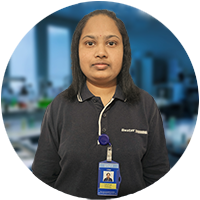 | Lavayna Chitroju is a Compounding Assistant at Baxter — a leading pharmaceutical compounding centre in Perth that manufactures lifesaving medications including cancer treatments. Her role involves selecting and preparing raw materials, treating them with specialised chemicals, and documenting batch numbers, expiry dates and quantities. She also manages the final stages of product labelling and sealing before dispatch. |
She began her career in the biomedical industry after completing a qualification in Business and Medical Administration at South Metropolitan TAFE.
Lavanya's advice for anyone beginning their career in this field is that Baxter is an excellent platform to grow and succeed.
How would you describe yourself?
I would describe myself as flexible, honest and a strong team player. I’m also someone who takes initiative — an implementer who creates action plans, delegates tasks and ensures things are completed efficiently.
What is your current role?
I currently work as a Compounding Assistant at Baxter — an advanced pharmaceutical compounding centre which manufactures and supplies lifesaving medicines including cancer treatments. My daily responsibilities include selecting raw materials according to pick sheets, ensuring they match correctly, and sending them to the prepping room via the raw materials hatch. In the prepping stage, I treat the materials with hydrogen peroxide and cross-check their quantity, expiry dates and batch numbers. Once prepping is complete, I send the tubs to the cleanroom hatch based on job priority.
I also manage job prioritisation according to dispatch times. After products return from the cleanroom; I label them, send them to the releaser, seal the final products and hand them over to the dispatch team.
What do you love most about your job?
I enjoy learning new medical terminology and understanding the importance of handling medications correctly. I also appreciate the task rotation every three hours, which keeps the work dynamic and engaging.
What do you enjoy most about working in WA's biomedical industry?
Western Australia offers advanced medical treatments and equipment, supported by strong research infrastructure. There are great opportunities to explore diverse career paths in this industry.
What was your education and training pathway to get here?
I completed a qualification in Business and Medical Administration at South Metropolitan TAFE.
What are your future career goals or next steps?
My next goal is to progress into the role of a Compounding Technician.
Lori Higgins | Quality Assurance Facilitator and Grants Officer
 | Lori Higgins is a Quality Assurance Facilitator and Grants Officer at OncoRes Medical, a Perth-based company developing a scanning device to help identify cancerous tissue during surgeries. Her role focuses on ensuring regulatory, safety and performance standards are met as the device progresses toward commercialisation, while also supporting grant reporting and funding initiatives. |
Lori's best advice for anyone starting out in this industry is to back yourself and trust your skills. Don’t be discouraged by job advertisements that list five years of experience — if you believe you have the capabilities, go ahead and apply. Showing initiative and genuine interest can open doors you didn’t expect, so don’t be afraid to take the first step — be proactive and reach out to organisations you admire, even if they haven’t advertised roles.
How would you describe yourself?
I’d describe myself as a planner and someone who thrives on structure and organisation. I’m naturally curious, which drives me to ask questions, explore ideas and dig deeper into complex problems. That curiosity, combined with strong critical thinking and problem solving skills, is essential in this industry where innovation and precision go hand in hand. I’ve always had a genuine love for science, and I thrive in problem solving environments.
What is your current role?
I’m a Quality Assurance Facilitator and Grants Officer at OncoRes Medical — a Perth-based medical device company that has developed a handheld, real time intraoperative imaging device that helps surgeons distinguish between healthy and cancerous tissue during breast cancer surgery. This innovation has the potential to significantly improve patient outcomes and reduce the need for repeat operations.
In my role, I ensure that processes and documentation meet regulatory, safety and performance standards as OncoRes Medical advances toward commercialising its device for international and domestic markets. I also support grant management, including reporting requirements, and collaborate with our commercial team to secure and manage funding opportunities.
What do you love most about your job?
What I love most about my current role is that every day feels like a school day — there’s always something to learn, explore or solve. Working in a startup like OncoRes Medical has given me exposure to a wide variety of tasks and responsibilities, which has significantly broadened my experience and skill sets.
I also value the close-knit team and the strong sense of community we’ve built; it makes collaboration genuinely enjoyable and creates a supportive environment where everyone is invested in our shared goals.
What do you enjoy most about working in WA's biomedical industry?
What I enjoy most about working in the local biomedical industry is the sense of being part of something that’s actively evolving. It’s a growing industry, which means there’s real opportunity to contribute to meaningful change and help shape its future.
I’ve met incredible people along the way and gained exposure to a wide network across the sector. The close-knit community makes collaboration easy and rewarding, and it’s exciting to be part of such a dynamic and forward-thinking environment.
What was your education and training pathway to get here?
I graduated in 2020 from Technological University Dublin with a Bachelor of Science in DNA and Forensic Analysis. This four-year program provided me with hands on experience and analytical expertise across pharmaceutical, biological, chemical and forensic laboratory settings. It also provided a solid grounding in good manufacturing practices, which has been instrumental in my current role.
How did your career journey start?
My journey into the biomedical industry began with a genuine love for science. Subjects like biology and higher level math's were always my favourites at school - I was drawn to their structure and the methodical way they help explain the world.
After completing my Bachelor of Science, I began my career at a small pharmaceutical company, where I as a Quality Officer overseeing the production of over-the-counter medications, including Paracetamol and Asprin-based products. This hands-on experience laid the foundation for my next role at AstraZeneca, where I joined the rare disease unit as a Quality Assurance Specialist.
After relocating to Australia for a lifestyle change, I reached out to OncoRes Medical - a company I admired - to explore potential career opportunities.
What are your future career goals or next steps?
In the future, I see myself stepping into more senior and managerial roles — leading teams and overseeing processes, particularly on the regulatory development side of the industry.
Career changers
It's never too late for a career change! If you're looking for a career where every day is different and you can be part of an exciting industry focusing on improving people's lives, the biomedical industry is a great option. In this short video, you'll hear from Reagan who recently completed a Diploma in Nursing at North Metropolitan TAFE and is now working at Joondalup Health Campus.
Reagan had a successful career in sales and manufacturing, but decided to change careers into nursing because he enjoys caring for people and wanted his work to be more rewarding. After graduating from TAFE as an enrolled nurse, Reagan built on his skills and is now an anaesthetic nurse in theatre where he supports patient care during surgery. Looking ahead, Reagan’s career in the biomedical industry could lead him into specialised roles such as Clinical Research Nurse, which bridges the gap between patient care and medical research. With countless opportunities available in this thriving industry, Reagan is well placed to continue growing and advancing his career. |
Use your transferable skills
If you're looking for a career change into the biomedical industry, or perhaps you've been out of the workforce for some time or have limited experience, your transferable skills are a great asset.
Transferable skills are skills you've collected from your previous work history and/or life experience, which can be used across different job roles and industries. Key transferable skills you have may include communication, teamwork, problem solving, organisation and time management, and people skills.
You may also have transferable technical skills — for example, if you have worked in data analysis in a business setting your technical skills could transfer to analysing research data in a scientific or medical setting. Or you may have experience working with equipment or technology that's similar to what's used in the biomedical industry.
Employers highly value transferable skills, as they provide a strong foundation for building your technical skills and knowledge. While specialised or technical roles in the biomedical industry may require additional training, your transferable skills remain relevant and valuable — they act as a bridge between past experience and future opportunities, making career transitions smoother. To make sure you're taking advantage of your transferable skills, and highlighting them to potential employers, follow these steps.
Now take your two lists — your own transferable skills, and the key skill requirements for your chosen new job or career — and cross-check them to see where you have matches. You may be surprised to find out just how many transferable skills you have to offer.
This will also help you identify any skill gaps, which you can address through training or industry experience.
Now that you know how your transferable skills match the requirements of your chosen new job or career, think about how you can help potential employers to make the connection. The best way to do this is by drawing on your experience, as in these examples.
- If you're wanting to move from the mining industry into biomedicine, you could highlight the connection that both industries are fast paced and rapidly evolving. Give examples of the skills you used to be able to work under pressure and adapt to change, to demonstrate that these skills would be transferable to your new role.
- If you're wanting to move from a general manufacturing role into something specialised such as pharmaceutical or medical device manufacturing, you could highlight the connection that both require excellent teamwork and attention to detail and give examples of the skills you used to be able to problem solve and focus on quality.
Career stories: Andy Huynh, Founder and Chief Executive Officer | Talk2View
 | Andy is the founder and CEO of Talk2View — an exciting Perth-based startup with a mission to revolutionise medical viewing software by simplifying complex imaging workflows and helping make healthcare more efficient. He has a background in mechanical and biomedical engineering, which has given him valuable transferable skills. His Talk2View innovation is an AI-powered medical imaging platform that provides a user-friendly intuitive experience for clinicians, medical practitioners and researchers to explore and analyse 3D medical images and scans through simple commands. |
Andy describes himself as curious and driven to solve meaningful problems that make a real world impact. He says that there’s incredible local talent and strong support for innovation in Western Australia, and he feels part of something that’s just beginning to bloom.
His advice for anyone entering the biomedical industry is to take calculated risks, there are many grants and programs to help you start without giving up your career. And most importantly, from the beginning, build a talented team you trust — no one does it alone.
What is your current role?
I’m the founder, Director and Chief Executive Officer / Chief Technology Officer of Talk2View. I lead the company’s direction, technology vision and product development — making medical imaging software more intuitive and accessible.
What transferable skills and experience helped you reach this position?
I have a background in mechanical and biomedical engineering and am completing a PhD in medical imaging and scientific computing at the University of Western Australia. My engineering training laid a foundation in product development and project management, while my PhD honed my deep subject matter expertise. By combining this technical foundation with Agentic AI tools, I was able to rapidly iterate and accelerate the development of my minimal viable product (MVP). This synergy of traditional engineering and modern AI tools helped create Talk2View.
How did you begin your journey in the sector?
My journey in this sector started through academic research, where I developed software combining medical imaging and computational methods to improve patient outcomes — particularly in surgery planning and image analysis.
In early 2025, after a major artificial intelligence (AI) advancement related to agentic AI, I saw a real opportunity of applying it into the medical imaging space. I pulled an all-nighter to build an early MVP and shared it with my colleague (now co-founder) and our lab. The response was overwhelmingly positive, and that’s how Talk2View began.
What do you love most about your current role?
Engaging directly with customers, learning from their feedback and using it to improve our product and guide the company’s direction.
What do you enjoy most about working in WA's biomedical industry?
Western Australia’s medical technology scene is growing rapidly. There’s incredible local talent and strong support for innovation — it feels like we’re part of something that’s just beginning to bloom.
What are your future career goals or next steps in this industry?
This company is my long term journey. I’m focused on growing Talk2View globally, and the team around it.
Career stories: Craig Breen, Chief Operating Officer | Lixa
 | Craig is the Chief Operating Officer at Lixa — a local start up that has developed an antibiofilm technology designed to restore the effectiveness of antibiotics in human health. The innovation has promising applications across human health, agriculture, marine and industrial sectors. With over 25 years of experience in operations, commercial management and project management across oil and gas, mining, energy and technology, Craig brings a wealth of transferable skills to Lixa — helping to identify opportunities and deliver strategies for expansion and commercialisation. |
Craig describes himself as a problem solver with a strong passion for learning and a drive to take on new challenges. He enjoys working collaboratively with people and sees his role as an excellent opportunity to apply his skills while making a meaningful contribution to the industry.
His advice for those considering a career change into the biomedical industry is to stay curious and open minded and never be afraid to ask questions — even those that might seem simple — as they often spark new ideas and fresh perspectives.
What is your current role?
I’m the Chief Operating Officer at Lixa, where I drive the company’s growth and expansion through commercialisation and strategic partnerships. Lixa’s breakthrough antibiofilm technology — originally developed to restore the effectiveness of antibiotics in human health — has revealed exciting potential across diverse industries including agriculture, environment and industrial environments. My focus is on bringing these innovations to other sectors and markets and securing a large scale manufacturing facility in Western Australia to support its next phase of growth.
What transferable skills and experience helped you reach this position?
My career spans more than 25 years in operations, commercial management and project management across the oil and gas, mining, energy and technology sectors. I’ve had the privilege of working with major organisations such as Woodside, as well as dynamic startups, which has equipped me with a broad range of expertise and transferable skills. This diverse background has enabled me to contribute effectively to Lixa’s expansion into other markets by identifying opportunities, managing risk and developing strategies that drive growth.
How did you begin your journey in the sector?
While studying the Australian Institute of Company Directors (AICD) course, I met Lixa’s Managing Director, Dr Maud Eijkenboom. I was deeply inspired by her story of how Lixa began and why tackling antibiotic resistance is so important to her and many others around the world. With the potential to transform lives through its antibiofilm technology designed to restore the effectiveness of antibiotics, Lixa’s mission resonated strongly with me. As I started to understand the wider opportunities for the technology in the marine and industrial industries, I realised my past experiences could contribute to their mission and help make a difference. Soon after, Dr Eijkenboom invited me to join her team as its Chief Operating Officer.
How would you describe yourself?
I would describe myself as a problem solver with a strong passion for learning and a drive to take on new challenges. I enjoy working collaboratively with people and see this role as an excellent opportunity to apply my skills while making a meaningful contribution.
What do you love most about your current role?
I enjoy being part of a nimble startup with the potential to grow into a global organisation. Lixa’s breakthrough technology is not only a game changer for humanity, but its applications across industries make the breadth of opportunities truly exciting. The variety keeps me constantly learning, and with no two days ever the same, the work is both challenging and deeply rewarding.
What do you enjoy most about working in WA's biomedical industry?
I enjoy being part of an industry that is still emerging and not yet fully established, where the rules are still being written. There’s a unique opportunity to help shape and grow the ecosystem, positioning Western Australia as a centre of excellence and a world leader in the field.
What are your future career goals or next steps in this industry?
I look forward to seeing Lixa grow into a global company, recognised for its excellence in research and development across both human health and industrial applications. Beyond this, I’m passionate about working with start ups — helping them commercialise their ideas and harnessing the energy and creativity of emerging talent. Mentoring the next generation of innovators is something I’d love to continue, as it’s both inspiring and rewarding.
What skills would I need?
A career in the biomedical industry requires a well-rounded blend of professional skills and personal qualities. Explore these eight key skills that are valued by employers across the industry.

Problem solving and critical thinking are important skills in the biomedical industry. Whether you're manufacturing a medical device, assisting patients participating in a clinical trial, or conducting research into a new drug, you’ll need to be alert to possible problems and consider different solutions to achieve the best outcomes.
Being able to break a problem or situation into segments is a key skill of problem solving. You'll also need to know where and how to find information to help diagnose and solve problems — this may involve searching the internet, or asking more experienced colleagues. Asking questions, gathering data and analysing information will help you to evaluate options and develop solutions.
Critical thinking means generating and evaluating different solutions, then applying your analytical skills to determine which option best fits the situation. You need to be able to think in a way that looks at both positives and negatives, and considers input from others.
Much of the work in the biomedical industry is highly structured and project-based. To succeed, you need to be well organised, manage your time efficiently, and plan tasks to meet deadlines and deliver project outcomes.
For example, medical research programs can often run over several years, with many steps and milestones along the way. A lot of work also requires the coordination of people working individually and in teams — each with specific tasks to do within the project, and working within a set timeframe to achieve required outcomes.
You'll need to be well-organised, able to manage time effectively, and work to deadlines. You'll also need to know how to plan tasks to ensure all elements of the work are considered and included.
Attention to detail is essential in the biomedical industry. Whether analysing laboratory samples, conducting research or planning the approvals process for a new product, small details can lead to major breakthroughs. For example medical research, or working in a laboratory analysing samples, requires constant focus as you look for the tiny details that could be the key to a successful outcome.
Attention to detail also applies to other skill areas — for example; when listening to people. You have to not just hear what they're saying, but listen to the little details so that you can ask the questions needed to get the information you want.
You’ll work with individuals who may not have the same technical background as you, meaning you may need to ask questions and listen actively to explore and solve problems, receive or give instructions, identify solutions, and contribute meaningfully to team discussions and project outcomes.
Strong writing skills are also important — for example, to document findings clearly in reports and to communicate information clearly in writing such as via email.
Negotiation skills are also very important for determining options and solutions.
Whether working in large or small teams, effective collaboration relies on mutual respect, active listening and valuing diverse perspectives. You’ll frequently engage across departments and with external partners, making strong interpersonal skills and an appreciation for peoples’ strengths and expertise essential to achieving shared goals. This means treating people with respect, listening to their opinions and ideas, and offering support when the pressure is on or if someone needs a hand. It's also important to value the diversity of ideas and experiences.
Collaboration means working together to get things done. You may work collaboratively with others in your team, in other teams, in other areas or departments within your workplace, or even with external partners such as hospitals or specialist facilities. It requires respect and consideration for other people's skills and abilities.
Ethics, integrity, confidentiality and trust are essential in the biomedical industry. You must act with professionalism and treat your patients, clients, colleagues and members of the public with dignity, courtesy and respect. You will be required to use your professional judgement, skill and care and take all reasonable precautions to avoid practices that could cause harm to patients and others.
You may encounter situations that require sensitivity and confidentiality, or have access to a person's healthcare records containing information that must not be disclosed to unauthorised persons. Your decisions must be based on fair and objective processes that comply with all relevant legislation and policy. You also have a duty to report any issues or situations that are in conflict with ethics and integrity.
Working with integrity simply means being honest; working in a transparent manner that openly demonstrates avoidance of conflicts of interest; conducting yourself in a professional manner; maintaining positive and collaborative work-appropriate relationships; and not engaging in fraudulent or corrupt behaviour.
Creativity and curiosity are needed for many roles in the biomedical industry, particularly amongst the innovators developing new technologies or products to address health problems. Having an enquiring and curious mind drives the desire to find something better, which can lead to innovative and creative solutions.
A curious mind asks ‘why’ and ‘how’, sparking ideas and solutions. It's important to always feed your curiosity and creativity by taking advantage of opportunities to learn new things, get involved in new projects, and meet new people.
Whether in research, clinical or technology-based settings, change can be constant. You’ll need to adapt to evolving priorities and challenges and be open to different ways of doing things. Staying flexible, managing stress and maintaining wellbeing will help you thrive in dynamic, fast-paced environments.
- You'll need personal resilience and have practical coping strategies to manage any stress or frustrations, while continuing to move forward positively.
- Always look for opportunities to build flexibility into your work and project schedules so you can adapt to unpredictable demands and changing priorities or situations.
Practising self-care, maintaining a healthy work-life balance, and seeking support when you need it will help sustain your personal and professional wellbeing during challenging times.
Do you need to skill up?
Training options and pathways
When it comes to getting a job in the biomedical industry, or progressing your career, having skills and knowledge will really give you the edge over other applicants. There's a range of vocational education and training (VET) courses available at WA TAFE colleges and private training providers that can set you up to be job ready, with the skills and knowledge that employers are looking for. For specialised roles in this industry, you can undertake degree-level study at university.
Vocational education and training
With VET, there's a course or qualification for a range of areas within this industry — from entry level through to higher-level qualifications. Once you have identified the type of work you are interested in, and/or the occupation you're going for, you can find a course or qualification that offers the skills and knowledge you'll need to be ready for that new job or promotion.
With VET, you have several options for completion of your qualification.
Apprenticeships generally focus on specialist trades areas such as engineering or manufacturing.
With an apprenticeship, you are employed (and paid) while you work and study. You'll do on the job learning, based on nationally accredited vocational education and training (VET) units of competency, combined with a formal training component delivered by a TAFE college or private training provider. You'll also undertake on the job learning through tasks and projects, with mentoring. On completion of your apprenticeship, you will receive a nationally recognised qualification.
Traineeships generally focus on specialised roles such as laboratory operations or information technology.
With a traineeship, you are employed (and paid) while you study. The training component of your traineeship is based on nationally accredited vocational education and training (VET) units of competency, and is delivered by a TAFE college or private training provider. You'll also undertake on the job learning through tasks and projects, with mentoring. On completion of your traineeship, you will receive a nationally recognised qualification.
These courses are designed as pathways into an apprenticeship or traineeship. The training component of your traineeship is based on nationally accredited vocational education and training (VET) units of competency, and is delivered by a TAFE college or private training provider.
If you are already employed in the industry, you may be eligible for an existing worker traineeship (EWT). This involves structured on the job learning, managed by an accredited TAFE college or private training provider, to deepen and broaden your skills and knowledge. On completion, you will receive a nationally recognised vocational education and training (VET) qualification.
Recognition of prior learning (RPL) is an assessment process to evaluate the skills, knowledge and experience you have gained through training and/or life and work experience, to determine whether it meets the required standards of a nationally recognised Australian qualification. Through RPL, you may have the opportunity to gain a full or partial qualification without having to complete units where your skills and knowledge already meet the required standards — this means you can save time and money by completing a qualification in a shorter period of time.
If you are a secondary school student and you'd like to get a head start on your career, you can choose to do a vocational education and training (VET) qualification while you're still at school.
In a school-based apprenticeship or traineeship (SBT), you will be a full time student at school completing your Western Australian Certificate of Education (WACE) and be employed part time in a workplace for on the job training so that you can gain hands on workplace experience (you will be paid for this work).
Other options to skill up
Getting a job without any relevant skills or experience can be challenging. In general, even entry level jobs will require some skills, knowledge and experience, and that's where other options can offer you a great pathway.
Volunteering gives you the opportunity to become an active member of your community, while helping others and yourself. It is also a great way to build a range of skills, knowledge and experience. Many volunteering opportunities focus on community support, and you may be able to find a volunteer role that relates to this industry.
Through volunteering, you can also gain valuable experience working with people. It's also an excellent way to network with individuals and organisations in your local area and learn out about upcoming job opportunities.
If there's a particular person or organisation you would like to volunteer with, get in touch with them directly to see if they have any opportunities. You could also look at your local newspaper or community noticeboard, or check out an organisation that advertises volunteering vacancies on behalf of different groups and causes.
To find out more, visit the Volunteering WA website to see how you could get involved.
You can also contact your local Jobs and Skills Centre on 13 64 64 for assistance with finding a volunteering opportunity.
Work experience
Although generally unpaid, work experience can be a fantastic way to get hands on practical experience in a particular field or occupation. Employers value skills and experience, so this can give you an advantage when looking for work. It's also a great way to find out whether working in this industry suits you, and if it's the kind of work you would like to do.
Internships and cadetships
An internship or cadetship is work experience combined with on the job training while studying for a career. An internship or cadetship can be done by secondary school students as well as those studying at college or university, and they're a great way to skill up. An internship or cadetship is a great addition to your resumé.
Internships are generally short term, and usually unpaid. While they may lead to employment with the company, this is not guaranteed.
Contact your local Jobs and Skills Centre on 13 64 64 for assistance with finding a work experience opportunity, or for more information about an internship or cadetship.
University degrees
If you are seeking a professional career in a specialist role within the biomedical industry, or aiming for a management or executive position, you may need a university-level qualification.
Get the skills you need, for the job you want
Whether you're just starting your career in biomedicine, seeking a higher level role or wanting a career change, having the right skills and knowledge is key to your success.
Here we have focused on key areas within the industry where TAFE training is available across Western Australia, with nationally recognised and accredited qualifications and short course skill sets for entry level jobs through to specialist fields.
With more than 1,000 courses to choose from, TAFE offers something for everyone. You can study at top facilities, learn from industry leaders, and create a clear path to a career.
Explore each area, to see a list of courses.

Please note
The courses listed here are not a comprehensive selection — other courses may also be suitable. Some courses may not be currently available for enrolment, and other courses that have not been listed here may become available. Please follow the links provided to browse the TAFE website or our course list for full details on availability, locations, and other information about TAFE courses in Western Australia.
This field offers a range of exciting career pathways — you can be performing a wide range of scientific tests and procedures from sampling, pathology and clinical testing through to data recording and clinical research. It's also a great pathway into clinical or biomedical research, or even into product development.
Completing a TAFE course is an excellent starting point, and you can do further study if you would like to build on your skills and knowledge to move into a more specialised area.
Courses
- Advanced Diploma of Laboratory Management
- Certificate III in Pathology Collection
- Certificate III in Laboratory Skills
- Certificate IV in Laboratory Techniques
- Certificate II in Sampling and Measurement
- Certificate III / IV in Sterilisation Services
- COVID-19 Collection (Pathology) Skill Set (Introductory level)
- Cross-Sector Infection Control Skill Set (Introductory level)
- Diploma of Laboratory Technology
- Pathology Collection Skill Set (Introductory level)
For more information about course availability and locations, please visit the TAFE WA website.
You can also search our course list here
Western Australia is home to world class manufacturing in the health and medical life sciences industry, with organisations specialising in areas including pharmaceutical and drugs development; medical equipment design and manufacturing; clinical, medical and surgical instrumentation; and many others.
Completing a TAFE course specialising in manufacturing or instrumentation is a great pathway to a range of interesting career opportunities.
Courses
- Advanced Diploma of Instrumentation and Control Engineering
- Applied Engineering Drawing and CAD Skill Set (Manufacturing)
- Certificate IV in Electrical — (specialise in Instrumentation, or as an Instrumentation Technician)
- Certificate III in Engineering — Technical (Manufacturing)
- Certificate IV in Engineering (CNC Machining, Manufacturing)
- Certificate II / III in Process Manufacturing
- Diploma of Electrical and Instrumentation
- Diploma of Engineering — Technical (specialise in Manufacturing or in Drafting, Manufacturing)
- Diploma of Instrumentation and Control Engineering
For more information about course availability and locations, please visit the TAFE WA website.
You can also search our course list here
Design is at the heart of innovation in the biomedical industry, and Western Australia is a world leader in the design and development of many life-changing healthcare products.
With today's technology and 3D modelling and design, this is a field that offers endless opportunities — a TAFE qualification is a great start.
Courses
- CAD and 3D Printing Skill Set (Product Design) (Introductory level)
- Certificate III in Design Fundamentals (Product Design)
- Certificate IV in Design (Product Design, Industrial Designer)
- Certificate IV in Information Technology (Immersive Technology AI and 3D Automation)
- Diploma of Engineering — Technical (Drafting)
- Diploma of Visual Arts (Product Design)
- Intermediate Solidworks (3D Model Maker)
- Introduction to Solidworks (3D Model Maker) (Introductory level)
For more information about course availability and locations, please visit the TAFE WA website.
You can also search our course list here
The biomedical industry is utilising robotics and automation in many different areas — from clinical and surgical applications, through to manufacturing and design.
This is an emerging field of specialisation, with many opportunities from entry level jobs through to senior positions.
With the skills and knowledge from a TAFE qualification, you'll be on your way to an exciting career in this interesting and varied field.
Courses
- Certificate IV in Autonomous Control and Remote Operations
- Certificate IV in Information Technology (Immersive Technology AI and 3D Automation)
- Certificate II in Integrated Technologies (Pre-vocational) (Robotics Control Stream)
- Certificate II in Integrated Technologies (specialise in Automation and Robotics, or Robotics Control Stream)
- Certificate IV in Integrated Technologies (Robotics Control Systems)
- Industrial Robotics and IoT (Internet of Things) Coding Skill Set (Introductory level)
- Programmable Logic Controller (PLC) Based Industrial Robotics Skill Set (Introductory level)
For more information about course availability and locations, please visit the TAFE WA website.
You can also search our course list here
The biomedical industry relies heavily on its information technology — from running complex data analysis and safeguarding networks through to software development, operating computer and technology-based equipment in medical and research facilities, and even building and managing websites.
A TAFE qualification in information technology is a great starting point for an interesting career.
Courses
- Certificate II in Applied Digital Technologies
- Certificate III in Information Technology (General IT)
- Certificate III in Information Technology (specialise in Network Administration, or Website Development)
- Certificate IV in Information Systems
- Certificate IV in Information Technology (specialise in Immersive Technology AI and 3D Automation, Cloud Networking and Security, Programming or Systems Administration Support)
- Cloud Engineering for Intermediate Roles Skill Set (Introductory level)
- Diploma of Applied Technologies
- Diploma of Information Technology (General, or specialise in Advanced Networking, Advanced Programming, Back-end Web Development, or Front-end Web Development)
For more information about course availability and locations, please visit the TAFE WA website.
You can also search our course list here
Artificial intelligence (AI) is used across the biomedical industry — in particular, clinical research for disease prevention and treatments, design and manufacturing, and data science and analysis.
Western Australia is part of a global community utilising AI for new developments in human genetics, stem cells, personalised medicines, pharmaceutical development, and more.
With a nationally accredited TAFE qualification in AI, you can build a great career for your future.
Courses
- Artificial Intelligence Skill Set (Introductory level)
- Certificate IV in Information Technology (Data Science and AI)
- Certificate IV in Information Technology (Games and Intelligent Systems)
- Certificate IV in Information Technology (Immersive Technology AI and 3D Automation)
- Diploma of Information Technology (Cyber Security and AI)
For more information about course availability and locations, please visit the TAFE WA website.
You can also search our course list here
Keeping information, records and data secure is a key priority for all organisations, and it's critical that they are protected against cyber security threats. The biomedical industry manages billions of pieces of data from a range of fields, including research. It takes specialised skills to manage and analyse this data for use in areas such as product design and finding healthcare solutions. You can get these skills through a TAFE qualification, and open the door to a range of interesting jobs and careers.
Courses
- Advanced Diploma of Cyber Security
- Advanced Diploma of Information Technology (Cyber Security)
- Certificate IV in Cyber Security
- Certificate III of Information Technology (Cyber Security)
- Certificate IV in Information Technology (specialise in Cyber Security Incident Response, Cloud Networking and Security, or Data Science and AI)
- Data Analysis Skill Set (Introductory level)
- Data Analysis Bootcamp Skill Set (Introductory level)
- Diploma of Information Technology (specialise in Cyber Security and AI, or Cyber Security and Networking)
- Introduction to Cyber Security, or Transition to Cyber Security Skill Set (Introductory level)
For more information about course availability and locations, please visit the TAFE WA website.
You can also search our course list here
There's a range of engineering jobs within the biomedical industry — all based on fundamental principles and technical considerations such as design, safety, functionality, efficiency, sustainability, and feasibility. There's also important roles in electrical, mechanical and electronic engineering that keep equipment working and ensure facilities, systems and infrastructure are performing correctly. This is a field that combines technical skills with practical know-how, and a TAFE qualification can provide an excellent pathway into a great career.
Courses
- Advanced Diploma of Engineering Technology (specialise in Electrical, or Mechanical)
- Certificate II in Electronics
- Certificate II in Electronic Assembly
- Certificate IV in Electronics and Communications
- Diploma of Electronics and Communications Engineering
- Certificate I in Engineering (entry level)
- Certificate III in Engineering (Technical)
- Certificate IV in Engineering
- Certificate II in Engineering Pathways (entry level)
- Certificate II in Sustainable Energy
- Diploma of Engineering (specialise in Advanced Trade, Technical, or Technical (Drafting))
For more information about course availability and locations, please visit the TAFE WA website.
You can also search our course list here
Nursing is a strong foundation for a career in biomedicine because the skills and knowledge you'll have, as well as your experience in patient care, are directly transferrable to a range of other fields within the industry. It's also a great way to build your understanding of medical and clinical procedures.
Starting with a TAFE qualification, and growing your skills and knowledge through on the job experience and further study, is a smart choice for your future career.
Courses
- Certificate II in Health Services Assistance (Assistance Nursing: Acute Care)
- Certificate IV in Preparation for Health and Nursing Studies
- Diploma of Anaesthetic Technology and Practice
- Diploma of Nursing (Enrolled Nurse)
For more information about course availability and locations, please visit the TAFE WA website.
You can also search our course list here
As with most industries, there's a range of 'behind the scenes' roles that support biomedical organisations, and there's many opportunities available in these areas. If you're more interested in the business side of the industry, perhaps in a finance or administrative role, a sales and marketing or legal role, or specialising as a project manager, a TAFE qualification is a great way to get the skills you need.
Courses
- Business Ready Skill Set (Introductory level)
- Certificate III in Accounts Administration (Finance roles)
- Certificate III / IV in Business (General)
- Certificate III / IV in Business (specialise in Administration, Customer Engagement, Records and Information Management, or Medical Administration)
- Certificate III in Business to Business (B2B) Sales
- Certificate IV in Entrepreneurship and New Business (Business Startup or Founder)
- Certificate III / IV in Legal Services (Legal support, Technology Transfer Manager)
- Certificate IV in Marketing and Communication (Sales, Marketing, Promotion, Medical Writer)
- Diploma of Business
- Diploma of Leadership and Management
- Diploma of Project Management
For more information about course availability and locations, please visit the TAFE WA website.
You can also search our course list here
Jobs and Skills Centres
With so many great job options and courses to choose from, it's important to make choices that align with your career goals. That's where information, advice and support can be really helpful.
Jobs and Skills Centres (JSCs) are located across Perth and regional WA. They provide free support and assistance to help with choosing training courses, career planning and development, and job seeking.
Contact your local centre by phone, or follow the link below to find your closest centre and drop in for a chat, to find out how they can help you.

Find out more about free support and services from JSCs here
Study spotlight: Laboratory operations at TAFE
Studying laboratory operations at TAFE will set you up with a nationally recognised and accredited qualification that can take you into a range of exciting fields within the biomedical industry.
At TAFE, you will learn from experienced industry professionals like Dr Kim Benjamin — an Applied Science Lecturer at South Metropolitan TAFE — who is committed to inspiring her students to develop inquisitive minds and a thirst for knowledge that will allow them to shine in their careers.
In this short video, you'll hear Dr Benjamin talk about laboratory operations being a great option for people at any stage of life — from school leavers to career changers — and the skills and knowledge you can gain through the hands on training and experience offered at TAFE.
Student story: Lewis, laboratory technology
Western Australia's TAFE colleges offer practical and hands on learning where you can gain real world experience as well as job ready skills and knowledge. Getting a TAFE qualification can set you up for a career, and serve as a pathway to further study.
In this short video you'll meet Lewis, who is completing a Certificate IV in Laboratory Technology at South Metropolitan TAFE. He plans to continue his studies after that, to gain a Diploma-level qualification. He appreciates the hands on experience he's gaining through practical training.
Find out more about TAFE courses here
Fee free and low fee training
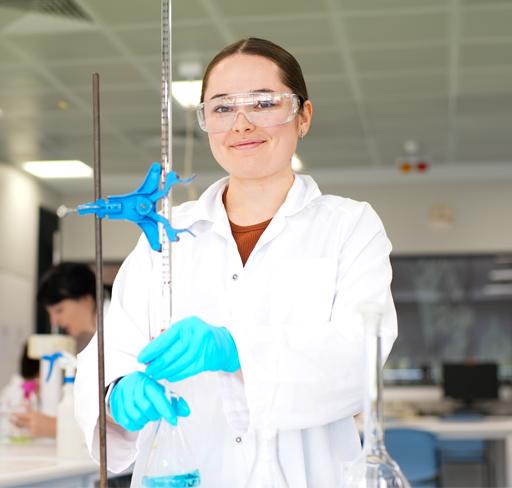
Get the skills you need for the job you want, and start your journey towards a brighter, more skilled future. Whether you need a full qualification or to quickly upskill, WA TAFE colleges offer a wide range of fee free and low fee training options — including short course skill sets — to help you achieve your employment and career goals.
There's never been a better time to get the skills for a career!
Please note: Some eligibility criteria apply for fee free training, and other fees may apply for fee free or low fee courses.
Full details about fee free and low fee courses are available here
International students
Western Australia is emerging as a global hub for biomedicine, with the fastest growing biomedical industry in the nation. International students studying here benefit from access to world class TAFE colleges, five leading universities offering cutting edge biomedical and health science programs, and internationally recognised research institutes driving innovation in areas including clinical trials, digital health and biotechnology.
At the heart of this thriving industry is Perth — WA’s capital and one of the world’s most liveable cities. With its high quality healthcare system, advanced infrastructure and stunning natural surroundings, Perth offers more than just a place to study — it’s a vibrant, welcoming city where students can build a meaningful career while enjoying a great lifestyle.
To find out more about international study in WA, visit the TIWA website
University study
Biomedicine offers exciting career opportunities where you can advance medical knowledge, improve healthcare and develop treatments and technologies — all while making a meaningful difference in people’s lives.
Studying at university enables you to explore a variety of specialised disciplines including microbiology, immunology, medical and pharmaceutical research, cell biology, biochemistry, data science and computer engineering.
Each university provides different study options, with some offering multiple degrees in this area. Many of these degrees can also serve as pathways into postgraduate study for further areas of specialisation. There are five universities in Western Australia that offer courses leading to careers in the biomedical industry. Visit their websites to find out more. |
Curtin University's Bachelor of Biomedical Sciences degree is just one of the options available for university study. The three-year degree combines biology with medicine for a career at the cutting edge of health science and innovation.
In the first year you will complete several general science units in human biology, molecular genetics, general laboratory techniques, chemistry, epidemiology and biostatistics. In the second and third years you can choose units to major in either human biomedicine, molecular genetics or pharmacology.
This short video explains more about studying biomedicine at Curtin. You can find out more here.
Other universities in WA that also offer a Bachelor of Biomedical Science include Edith Cowan University (ECU), Murdoch University, University of Notre Dame and the University of Western Australia (UWA).
University credit for VET study or professional experience
If you have completed a recognised vocational education and training (VET) qualification at TAFE, or gained professional work experience in a relevant field, you may be eligible to receive credit towards a degree. This credit, known as advanced standing or credit for recognised learning, could reduce your overall study load and shorten the time it takes to graduate.
Please check with the relevant university to find out what options are available.

Looking for advice on training, jobs or careers? We can help!
If you're interested to work in this exciting industry, your local Jobs and Skills Centre can help with free advice on training and career planning to help you get there. And because they work closely with local employees and industries, they know where the jobs are and how to help you get them. Whether you need help freshening up your CV, writing a job application, or deciding what training course is the best option for you — your JSC can help.
Jobs and Skills Centres are located throughout metropolitan Perth and regional WA, and outreach services are also available in regional areas. All services are free — contact your local JSC to find out how they can help you.