

Biotechnologist
Biotechnologists use biological organisms to create and improve products and processes in fields such as agriculture, environmental conservation and health and medical life sciences. They study the genetic, chemical and physical attributes of cells, tissues, micro organisms biological molecules, applying genetic engineering and advanced laboratory techniques, and collaborate with researchers and engineers to create innovative treatments such as genetic modification and stem cell research and identify opportunities for commercial use.
Working conditions
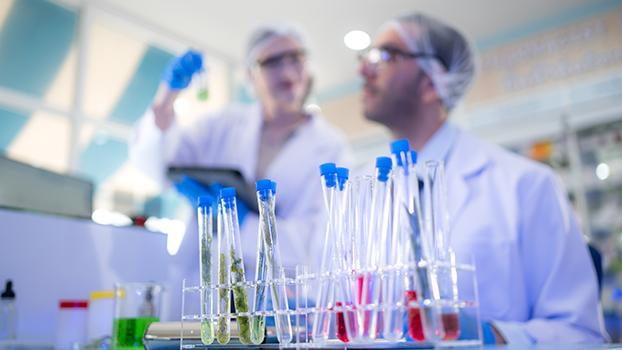
Biotechnologists work in laboratories and offices usually located in universities, research institutes or processing and/or manufacturing plants. They often work with hazardous chemicals and biological matter, which will require them to wear protective clothing. Those based in manufacturing or processing plants may also work around machinery which can be noisy and potentially dangerous.
The applications of biotechnology are widespread and include developing new medicines and vaccinations, cross breeding plants and animals to encourage beneficial characteristics, and using bacteria and enzymes in areas such as food production and waste treatment.
A biotechnologist in the health and medical life sciences industry uses biology and technology to develop drug products, diagnostics, and therapies that advance human health. They study cells, microorganisms, and biological molecules, applying genetic engineering and advanced laboratory techniques, and collaborate with researchers and engineers to create innovative treatments such as genetic modification and stem cell research. Biotechnologists in this industry work in laboratories and offices across universities, research institutions, not for profit and government organisations, pharmaceutical, biotechnology and medical technology companies and contract research organisations (CROs).
Most biotechnologists will work regular business hours, however, evening and weekend work may occasionally be required to complete experiments or compile reports. Some biotechnologists may also work with cutting edge and potentially controversial technologies such as genetic modification and stem cell research, and often work with hazardous chemicals and biological matter which will require them to wear protective clothing.
Tools and technologies
Biotechnologists use a range of standard and highly specialised laboratory equipment. The more standard equipment includes microscopes, filters, pumps, evaporators and centrifuges. Many of their experiments are carried out with the aid of computerised machines which can perform highly complex and specialised tests in a relatively short space of time. Some chemicals may release noxious fumes and require them to wear masks and carry out experiments in specially designed fume cupboards.
Education and training
To become a Biotechnologist, you typically need a university degree in science with a major in biotechnology or biomedical science. Curtin University and the University of Western Australia (UWA) offer courses in this field.
For details on course structure, entry requirements and application deadlines, please contact the educational institutions directly.
Share this occupation


Free support and assistance
Your local jobs and Skills Centre can provide free information, support and assistance to help you decide on the best training options to meet your goals.


Disclaimer
The information presented on the occupation profiles within this website is offered as a guide only.