


Aboriginal and Torres Strait Islander health worker
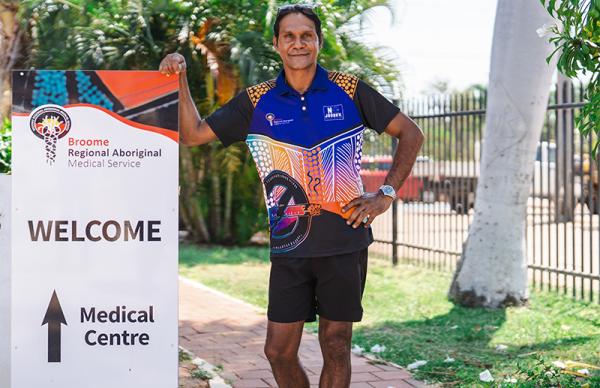
Aboriginal and Torres Strait Islander health workers liaise between health care professionals and Aboriginal patients to improve the quality of services provided and health outcomes for those patients. They help to bridge the cultural differences that can exist in healthcare settings, by acting as an interpreter to ensure both the healthcare professional and the Aboriginal patient understand each other. Aboriginal and Torres Strait Islander health workers provide cultural education to persons outside the cultural community. These workers may also provide counselling to clients, as well as make house visits to monitor patient progress, and provide support to patients and their families to encourage them to learn more about health issues.
Working conditions
These workers are often the first point of call for patients attending Aboriginal medical services located throughout the State. As a result, Aboriginal and Torres Strait Islander Health Workers may be required to work in remote communities. This may require travelling long distances, as well as working shift work and weekends.
Tools and technologies
Aboriginal and Torres Strait Islander Health Workers are expected to be able to apply first aid in an emergency and should be able to use appropriate first aid equipment.
Education and training
To become a qualified Aboriginal and Torres Strait Islander health worker, you usually need to gain a qualification in Aboriginal and Torres Strait Islander primary health care work.
The Certificates III and IV in Aboriginal and/or Torres Strait Islander Primary Health Care and the Certificate IV in Aboriginal and/or Torres Strait Islander Primary Health Care Practice are offered at registered training organisations throughout Western Australia. To find a training provider near you, browse the Jobs and Skills WA website or visit the My Skills website.
You can also undertake a traineeship. The Aboriginal and/or Torres Strait Islander health care worker (level 2) traineeship takes 12 months to complete and is available as a school-based traineeship. The Aboriginal and/or Torres Strait Islander health care worker (level 3 and level 4) traineeships usually take 12 and 24 months to complete.
Share this occupation


Free support and assistance
Your local jobs and Skills Centre can provide free information, support and assistance to help you decide on the best training options to meet your goals.


Disclaimer
The information presented on the occupation profiles within this website is offered as a guide only.