


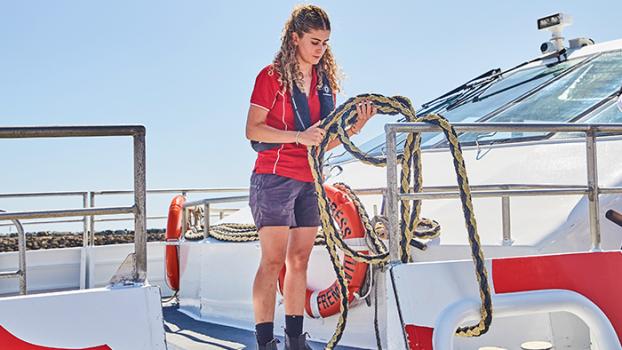
Deck hand
Deckhands carry out a range of basic duties essential to the running and maintenance of a boat or ship. The exact duties of a deckhand can vary depending on the type of vessel they work on. Those working on sailing ships may have to climb tall masts and work in the ship's rigging, while those working on a charter boat or ferry may spend more time taking care of passengers, sometimes serving drinks and food. Regardless of the vessel, all deckhands assist in keeping the vessel clean and seaworthy, keeping lookout, steering and adjusting the course as directed and dealing with any emergencies that occur.
Working conditions
Many deckhands only spend short periods of time at sea, however, with experience and greater training they may spend weeks or months at a time away from land. They work as part of a team and must follow safe work practices to minimise the risk of danger to themselves, other crew members and passengers. They often work outdoors, in a range of weather conditions, though even when working indoors they may be exposed to rough weather conditions, which can be unpleasant. Hours of work can vary greatly depending on the type of vessel and the season, with longer shifts generally required in summer months. Some deckhands may work shifts, which can include nights and weekends.
Tools and technologies
Deckhands use ropes and knots for a variety of purposes, including berthing vessels and tying down cargo. They may also use navigational instruments and radio equipment, usually under the supervision of a senior crew member. Safety equipment is very important and can include fire-extinguishers, life jackets and inflatable life rafts. They may also use standard cleaning equipment and hand tools to carry out general maintenance duties.
Education and training
To become a deck hand you usually need to gain a qualification in maritime operations.
The Certificate I in Maritime Operations (General Purpose Hand Near Coastal) is offered at Western Australian registered training organisations.
Browse courses through Jobs and Skills WA and search on the My Skills website to find a registered provider near you.
Share this occupation


Free support and assistance
Your local jobs and Skills Centre can provide free information, support and assistance to help you decide on the best training options to meet your goals.


Disclaimer
The information presented on the occupation profiles within this website is offered as a guide only.